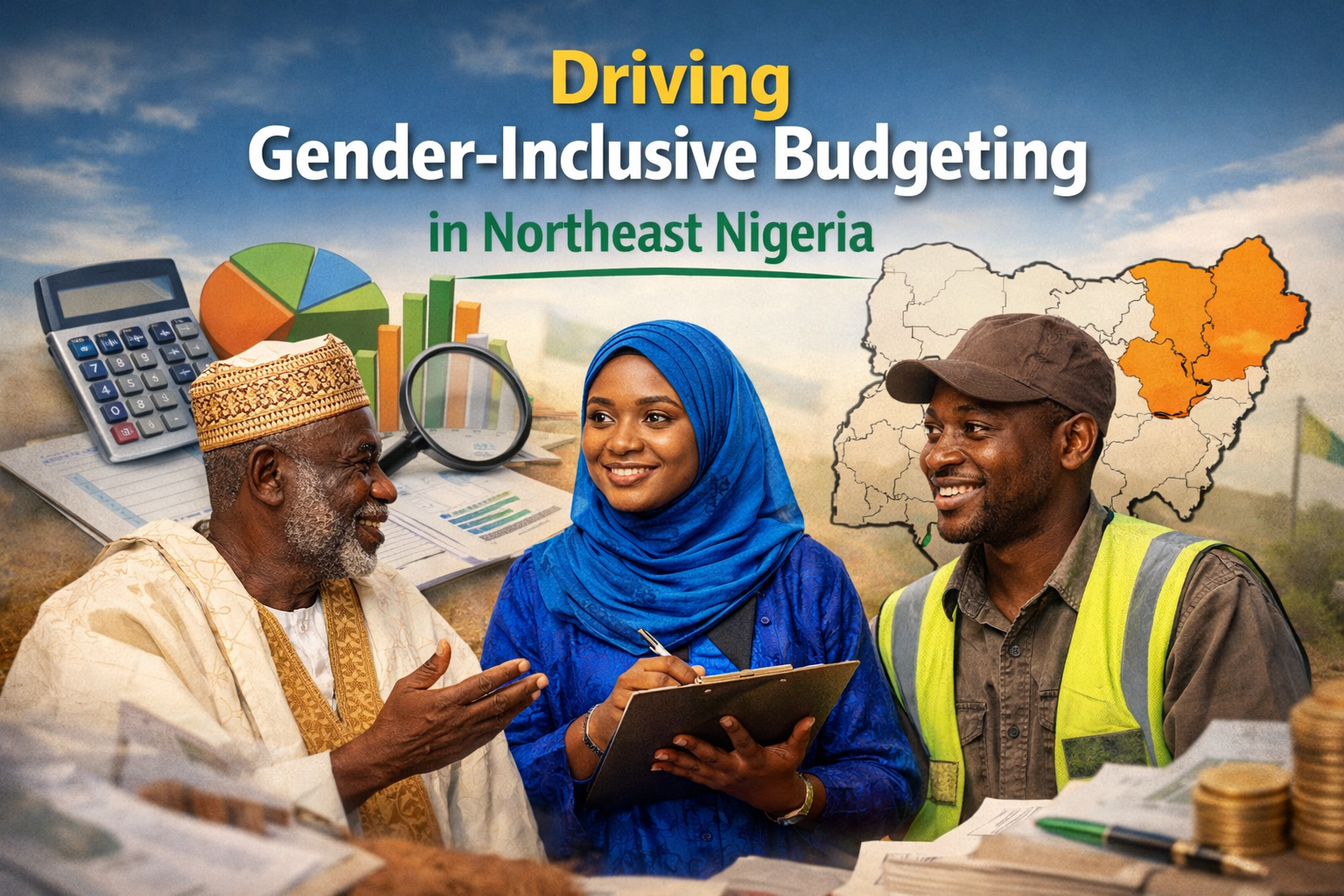
In many communities, budgeting is often treated as a technical process reserved for institutions and officials. But in reality, budgets shape everyday life. They influence which services are prioritized, whose needs are recognized, and whether development planning reaches those who are often excluded. At Aid for African Women & Girls (A2WG), we believe budgeting must go beyond figures and line items. It must reflect justice, inclusion, and accountability. That is why A2WG has been advancing gender-inclusive budgeting as part of its wider work to strengthen community systems and sustainable development in Northeast Nigeria.
This work is rooted in A2WG’s engagement with conflict-affected communities in Adamawa State, particularly in Michika, Madagali, and Mubi South. Across these areas, the organization has been supporting pathways for economic empowerment, inclusive education, governance, and peacebuilding, while also promoting long-term sustainability through community ownership and institutional engagement. Gender-inclusive budgeting emerged within this broader effort as a practical way of ensuring that planning and resource allocation respond to real barriers faced by women, girls, persons with disabilities, and other marginalized groups.
A major step in that process came through A2WG’s workshop with traditional leaders and community stakeholders, which focused on developing and validating a gender-inclusive framework. The workshop emphasized meaningful participation, shared ownership, cultural sensitivity, accountability, accessibility, and evidence-based planning. These are not abstract ideas. They are the same principles that make a budget genuinely inclusive. A gender-inclusive budget asks who is being consulted, what data is being used, which needs are being prioritized, and whether public resources are being directed in ways that reduce exclusion rather than deepen it.
The workshop also created space for participants to engage with core gender concepts such as equity, empowerment, vulnerability, and power relations. This matters because many forms of exclusion are built into the way decisions are made. When budgets are designed without understanding how inequality affects women and girls differently, they can unintentionally reproduce the same barriers development actors are trying to solve. A2WG’s approach has therefore been to connect budgeting with lived realities at community level, rather than treating it as a detached administrative exercise.
What makes A2WG’s intervention especially relevant is that it links budgeting to governance reform and institutional practice. As part of the next steps identified through the process, A2WG planned to work alongside the Adamawa State Ministry of Women Affairs and Social Development to support workshops for local officials on gender-responsive budgeting. That shift is important. It moves the conversation from awareness to implementation, helping public institutions think more intentionally about how planning and budgets can reflect the needs of women, girls, and other underserved groups.
A2WG’s work also recognizes that inclusive budgeting cannot succeed in isolation. It must be connected to stronger policy systems, better representation, clearer accountability, and long-term sustainability. That is why the organization has tied gender-inclusive budgeting to wider efforts around community mediation, disability-rights advocacy, policy mainstreaming, and integration of project outcomes into state planning frameworks. In parallel, A2WG’s sustainability planning has emphasized local ownership, inclusivity, collaboration, economic self-reliance, and annual review, reinforcing the idea that inclusive budgeting should become part of how communities and institutions function over time.
The lessons emerging from this work are both practical and urgent. Participants identified ongoing gaps, including limited representation of women and the absence of sufficiently gender-responsive policies and systems. They also highlighted the need for stronger sex-disaggregated data, clearer accountability mechanisms, more community sensitization, and a more deliberate effort to ensure women, youth, and marginalized populations are represented in local decision-making. One of the strongest ideas to emerge was the call for budgeting to start from the grassroots and move upward. That bottom-up approach reflects the spirit of gender-inclusive budgeting: planning that is informed by real community priorities, not only institutional routines.
For A2WG, gender-inclusive budgeting is ultimately about fairness in development. It is about making sure that women and girls are not treated as afterthoughts in public planning. It is about ensuring that institutions listen better, allocate better, and respond better. And in Northeast Nigeria, where conflict, displacement, and inequality have deepened vulnerability for many communities, that kind of budgeting is not optional. It is essential. Through dialogue, local partnership, institutional engagement, and long-term planning, A2WG is helping to show that a budget can be more than a financial tool. It can be a pathway to dignity, inclusion, and resilience.